Acer saccharum- Sugar Maple

Acer saccharum- Sugar Maple

SKU 16732 Category

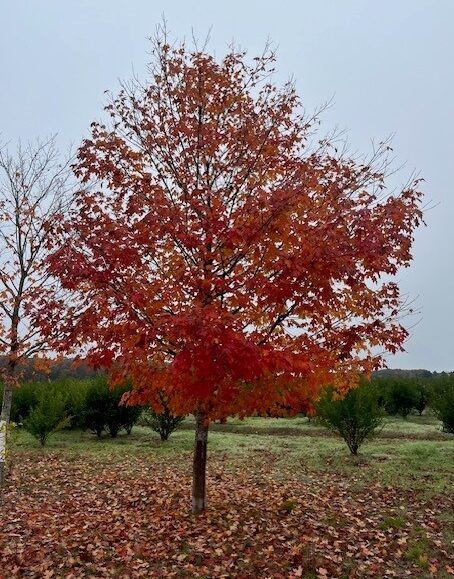
Large tree with rounded, dense crown and striking, multicolored foliage in autumn. Sugar maple’s landscape size is 60-75 ft. but this popular hardwood can grow much taller in the wild. Bark is smooth in youth, becoming quite shaggy with age. Its straight, central trunk; wide-spreading branches; and pointed crown are all attractive landscape characteristics but are less noted than the species’ brilliant red, yellow and orange fall foliage. One of the best of the larger shade trees, sugar maple is Canada’s national tree, as represented by the maple leaf on its flag. Maples, particularly Sugar Maple, are among the leading furniture woods. This species is used also for flooring, boxes and crates, and veneer. Some trees develop special grain patterns, including birdseye maple with dots suggesting the eyes of birds, and curly and fiddleback maple, with wavy annual rings. Such variations in grain are in great demand. The boiled concentrated sap is the commercial source of maple sugar and syrup, a use colonists learned from the Indians. Each tree yields between 5 and 60 gallons of sap per year; about 32 gallons of sap make 1 gallon of syrup or 4 1/2 pounds of sugar. One of the best of the larger shade trees. It is susceptible to salt. (Dirr)Sugar maple is Canadas national tree, as represented by the maple leaf on the Canadian flag. (Kershaw)

Price range: $29.99 through $179.99

Please note: Most pictures represent mature plants. Unless otherwise specified, all of our plants are sold in 4″ pots to make shipping possible and will mature in time.

Learn more about how the process works and how our plants are delivered.

Additional information

Native

,

Wetland Indicator

Sunlight

,

Special Attributes

,

Moisture

Bloom Period

April

Size

10 Gallon, 2 Gallon, 7 Gallon

Product Description

Acer saccharum, commonly known as sugar maple, is one of the most iconic native trees of eastern North America, prized for its brilliant fall color, attractive form, and long-term value to wildlife. A classic choice for native plant landscapes, woodland gardens, wildlife habitat, shade trees, and naturalized areas, sugar maple brings beauty and ecological value to the landscape for generations.

Sugar maple is best known for its spectacular autumn display, when its distinctive five-lobed green leaves transform into vibrant shades of yellow, orange, red, and scarlet. Its dense, rounded canopy provides excellent shade during the summer, while its gray bark and strong branching structure add winter interest.

In spring, Acer saccharum produces small clusters of flowers that provide an early-season resource for native bees and other pollinators. Its paired winged seeds, or samaras, mature in fall and provide food for birds, squirrels, and other wildlife. The dense canopy also offers valuable cover and nesting habitat.

Sugar maple performs best in full sun to partial shade and prefers deep, fertile, well-drained soils with consistent moisture. It is naturally associated with rich forests and woodland habitats, making it an excellent choice for larger properties and landscapes where a long-lived native shade tree can develop to its full potential.

Whether you’re looking for brilliant fall color, a beautiful native shade tree, wildlife habitat, or a lasting addition to a woodland landscape, Acer saccharum is an outstanding choice. Its longevity, ecological importance, and iconic autumn foliage make sugar maple one of the most valuable native trees for the landscape.

You may like ...